WakeUp
No more snoozing wake up with custom tasks and smart tones.
Lead Product Designer
1 month
Overview
Most alarm apps succeed at waking people up but fail at getting them out of bed.
Traditional alarm apps assume the problem is simply hearing the alarm. In reality, the biggest challenge begins after users open their eyes. Sleep inertia, repeated snoozing, and low morning motivation make it difficult for people to transition from sleeping to taking action.
Most users don't oversleep because they lack discipline; they oversleep because existing alarm experiences require too little commitment to turn intention into action.
I was brought on as Lead Product Designer to rethink the wake-up experience by designing a behavioral system that helps users overcome sleep inertia, reduce snoozing, and build healthier morning routines through small, intentional interactions.
Contributions
I led the end-to-end product design process, from behavioral research and user flows to interaction design, prototyping, and usability testing.
Responsibilities:
Lead Product Designer: Sole designer responsible for UX research, interaction design, interface design, prototyping, and design validation.
Core Focus: Designing behavioral wake-up mechanics that encourage users to transition from sleep into productive morning routines through cognitive activation, physical movement, and positive reinforcement.
Problem
Getting out of bed isn't a scheduling problem, it's a behavioral one.
Through research into morning habits and sleep behavior, I found that users rarely struggled to hear their alarms. Instead, they struggled with what happened immediately after waking.
Sleep inertia makes waking up feel physically difficult
Many users described feeling mentally awake but physically unable to leave their bed. Traditional alarms stop once dismissed, leaving users without any support during the most difficult part of the morning.
"I know I'm awake... I just can't convince myself to get up."
Snoozing rewards the wrong behavior
The snooze button provides immediate comfort while making it harder for users to fully wake up. Each additional snooze increases the likelihood of oversleeping and starting the day feeling rushed.
"Five more minutes always becomes thirty."
Every morning routine is different
Some people respond well to loud alarms, while others wake better through gentle sounds or mental stimulation. One-size-fits-all alarm experiences fail to accommodate different habits and preferences.
"Some alarms scare me awake, others don't wake me at all."
Motivation disappears within seconds
Even after dismissing an alarm, users often return to bed because there is no immediate reason to stay engaged.
"Once I turn the alarm off, my brain tells me to sleep again."
Process
To redesign mornings, I first needed to understand why people return to sleep.
Rather than focusing on alarm sounds or visual design, I mapped the behavioral journey users experience from the moment the alarm rings until they fully begin their day.
Stage 1: Understanding Morning Behavior
Four key insights emerged from user research.
Sleep Inertia
The first few minutes after waking are when users experience the highest resistance to movement.
Cognitive Activation
Simple mental tasks help transition users from passive wakefulness into active thinking, reducing the likelihood of falling back asleep.
Physical Commitment
Small physical actions create momentum. Standing up, stretching, or moving across the room dramatically increases the chances of staying awake.
Positive Reinforcement
Users are more likely to repeat healthy morning habits when progress is visible and small achievements are acknowledged.
Stage 2: Designing the Wake-Up Flow
Unlike traditional alarm apps that stop after dismissal, I designed a structured wake-up journey consisting of four interaction states.
State A:
Alarm Activation The alarm begins using the user's preferred sound and wake-up settings.
State B:
Wake-Up Challenge Users complete a configurable cognitive or physical task before dismissing the alarm.
State C
Morning Momentum The app encourages immediate movement through motivational nudges, habit reminders, or light activity.
State D:
Progress & Reflection Users view streaks, completion history, and performance metrics that reinforce long-term habit formation.
Solution
Replacing passive alarms with an active morning routine that helps users transition from sleeping to starting their day.
Instead of relying solely on louder alarms or stricter snooze limits, I designed a behavioral wake-up system that encourages users to engage both mentally and physically before fully dismissing their alarm.
The experience combines habit formation, personalization, and gentle motivation to make mornings feel intentional rather than stressful.


Designs
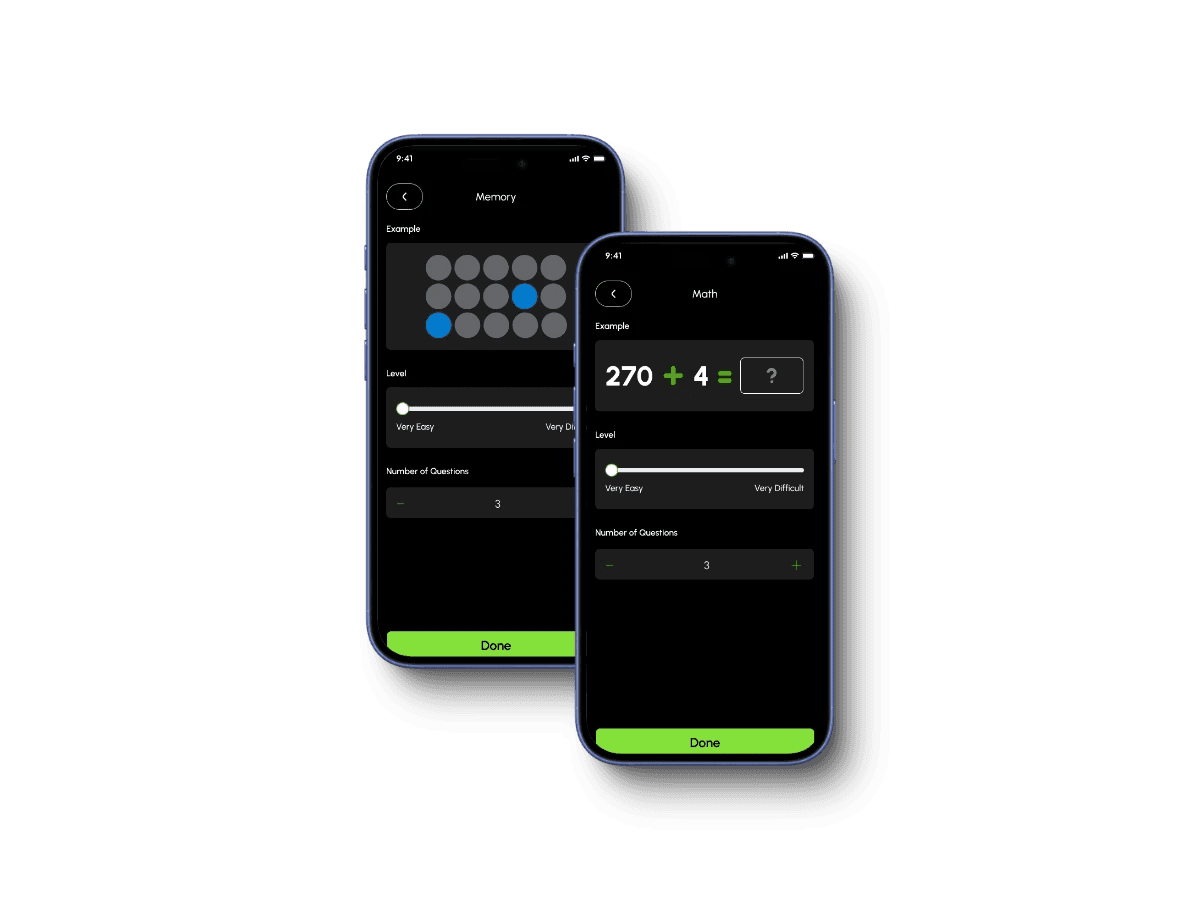
1. Interactive Wake-Up Tasks
Turning alarm dismissal into meaningful action.
Instead of allowing users to silence the alarm with a single tap, I introduced interactive wake-up tasks that require users to actively engage with the experience.
Users can solve quick puzzles, complete memory challenges, perform simple stretches, or finish light exercises before the alarm is dismissed.
These activities reduce sleep inertia while encouraging users to become mentally and physically alert before returning to bed becomes an easy option.

2. Personalized Alarm Experience
Different mornings require different wake-up strategies.
Users can customize alarm sounds, snooze limits, wake-up difficulty, and preferred task types to match their routines and sleeping habits.
Rather than forcing everyone into the same experience, the system adapts to individual preferences, creating a more effective and sustainable wake-up routine.


3. Smart Wake-Up Assistance
Helping users wake up at the right moment instead of the loudest moment.
Using sleep tracking insights, the app detects lighter sleep phases and gradually introduces gentle sounds before the scheduled alarm.
This creates a smoother transition from sleep to wakefulness while reducing the grogginess commonly associated with abrupt alarms.


More Screens


Impact
Designing for behavior instead of notifications created a more engaging morning experience.
Reduced Morning Friction
Users transitioned from waking to beginning their routine through guided interactions instead of relying solely on willpower.
Increased Alarm Completion
Interactive wake-up tasks encouraged users to remain engaged until they were fully awake, reducing repeated snoozing.
Stronger Habit Formation
Progress tracking and personalized routines motivated users to build consistent morning habits over time.
Higher User Engagement
Rather than functioning as a simple utility, the app became part of users' daily routines by supporting healthier behaviors instead of simply playing an alarm.
Learnings
The most effective alarm isn't the loudest one—it's the one that changes behavior.
This project reinforced that successful product design often depends more on understanding human psychology than adding new features.
Users don't struggle because they can't hear their alarm. They struggle because the transition from sleep to action is filled with friction.
By designing interactions that reduce that friction through movement, cognition, and positive reinforcement, the product shifts from being an alarm clock to becoming a behavioral companion that helps users start their day with intention.
More projects
Check out some of my favorite & most recent projects.


